Real vs Replica
How to Verify a Rolex Daytona: Real vs Fake Authentication Guide
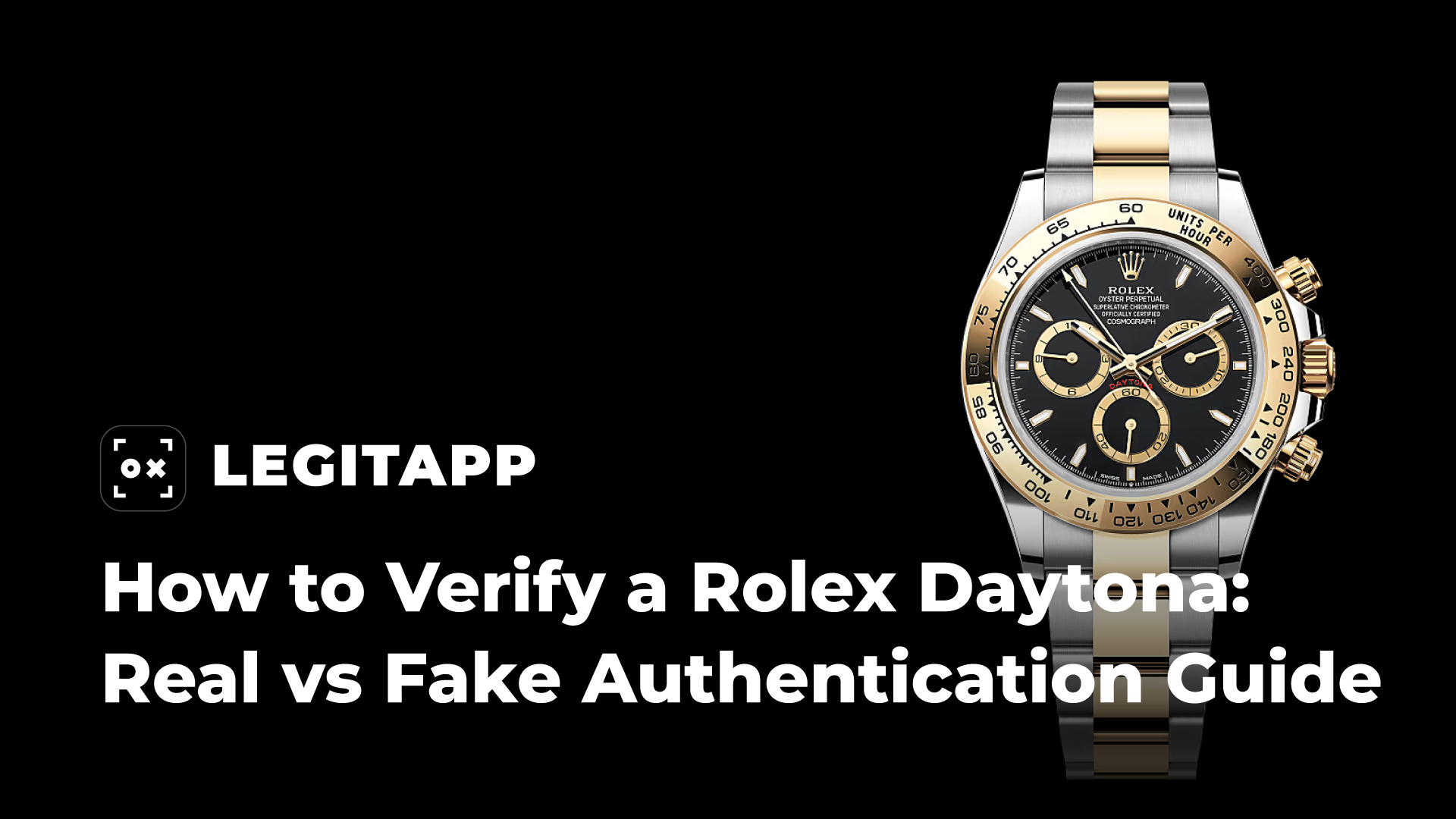
The Rolex Cosmograph Daytona is one of the most iconic luxury chronographs in the world, with a heritage rooted in motor racing and high performance. Due to its legendary status and immense resale value, often reaching six figures for rare references. While modern replicas have become increasingly sophisticated, the extreme craftsmanship of a genuine Rolex still leaves clear markers of authenticity. In this guide, our professional authenticators share several critical checkpoints to help you verify a genuine Rolex Daytona.
1. Hand Finishing
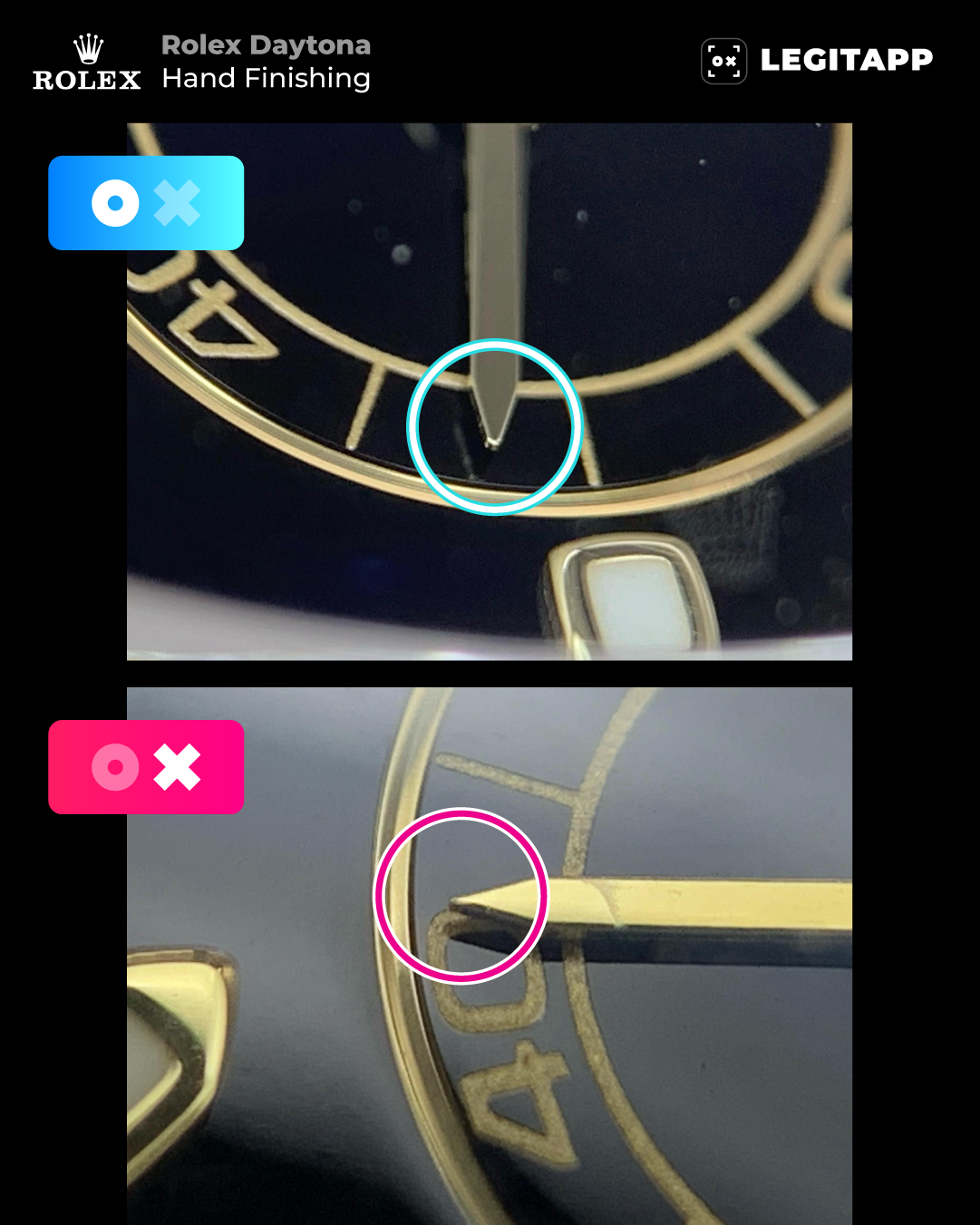
Rolex handsets are finished to an incredibly high standard, as they are a focal point of the dial's aesthetics.
Authentic: On a genuine Daytona, every hand—including the three small sub-dial needles—undergoes meticulous polishing. Even the very tips of the hands are chamfered and rounded, allowing light to reflect off the edges smoothly and without distortion.
Replica: Under magnification, the triangular tip of replica hand appears rough and unfinished. You will likely see sharp, "stamped" edges or microscopic burrs that reveal a lack of hand-applied craftsmanship.
2. Sub-dial Paint & Texture
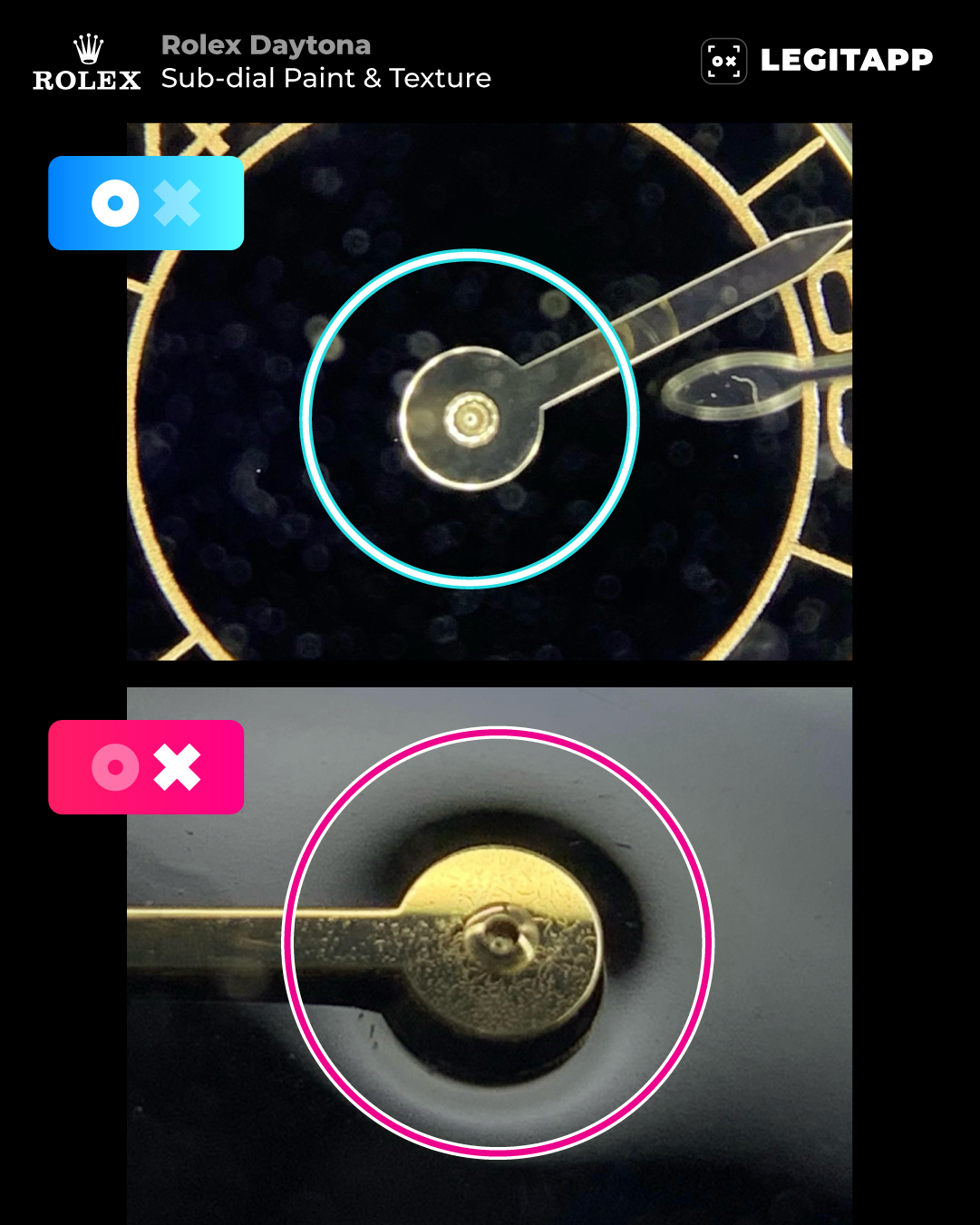
The three sub-dials (registers) are complex elements that require perfect execution in lacquering and printing.
Authentic: The paint surface on a genuine Rolex dial is perfectly flat, smooth, and uniform. There is a "flawless" quality to the ink tension across the entire sub-dial, showing no signs of imperfection.
Replica: Counterfeiters often struggle to maintain even paint thickness. Under a loupe, you may notice that the paint appears uneven or "sunken," particularly around the center post where the hand is mounted. This "crater" effect is a common sign of a replica dial.
3. The Coronet (Crown Logo)
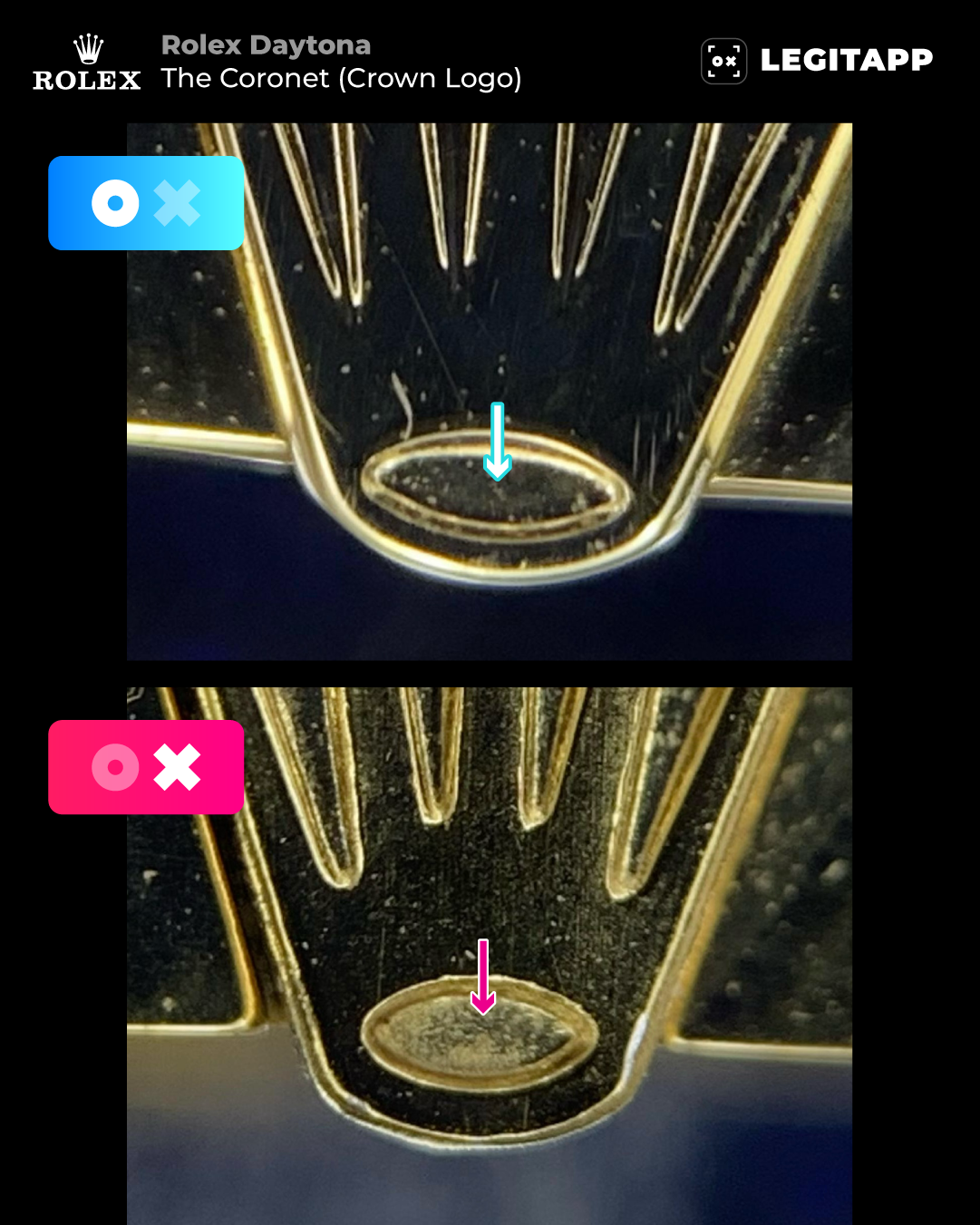
The Rolex crown logo, or "coronet," is a hallmark of the brand's identity and must meet strict geometric standards.
Authentic: The crown sits with precise proportions. The "mouth" of the crown (the small oval-shaped opening at the bottom) is balanced and aligned with the overall logo structure.
Replica: Fakes often fail this proportion test. The oval opening of the crown is frequently too large or wide compared to the genuine version, making the entire logo look squat or distorted.
4. Functional Finishing
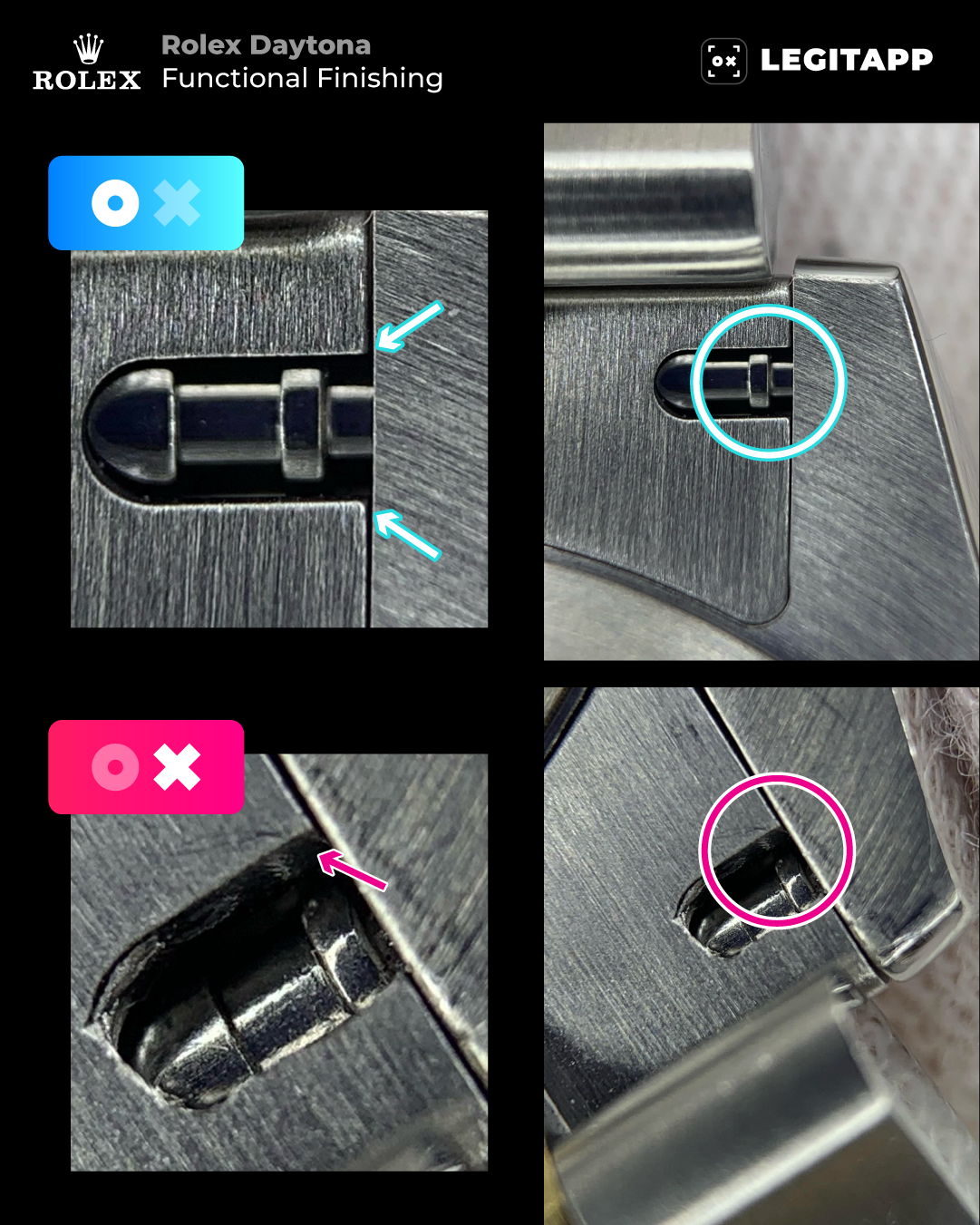
Rolex’s commitment to "functional luxury" means that every part of the watch—even the hidden edges—must be comfortable for the wearer.
Authentic: Rolex applies functional chamfering to all small transition points. These beveled edges are polished until they are smooth and rounded, ensuring the watch feels comfortable and doesn't "scratch" the skin or snag on clothing.
Replica: Replicas often skip these labor-intensive finishing steps. The edges at the lugs and the undersides of the case are often left sharp and unfinished.
Authenticate Your Watch with LegitApp
With Daytona resale prices remaining strong worldwide, authentication has become a critical step before buying or selling. Many collectors turn to LegitApp for professional watch authentication to reduce risk in the secondary market. By combining expert horological knowledge with advanced AI technology, LegitApp helps ensure informed decisions before high-value transactions.
This article is for educational purposes only. For final authentication results, please refer to our professional services.



 Luksusowe zegarki
 ROLEX
ROLEX ALL
ALL